Announcement – Society for the History of Natural History 2026 awards
Dear Friends,
The Council of the Society for the History of Natural History (SHNH) is delighted to announce the following awards, which will be celebrated at our forthcoming AGM on Thursday 2 July 2026 at 12:30pm BST.
- SHNH President’s Award: Manchester Museum, Manchester, UK
- SHNH Founder’s Medal: Anna Marie Roos
- SHNH Natural History Book Prize (John Thackray Medal): Hans Walter Lack, James A. Compton & Martin W. Callmander
- SHNH Stearn Student Essay Prize: Muhammad Ali Ozain
The AGM and prize-giving are coinciding with our summer meeting, The Zoological Society of London (ZSL) at 200: Science, Society, and the Natural World, which is taking place at London Zoo. Online booking for the meeting is open: https://shnh.org.uk/news/registration-open-for-shnh-zsl-summer-meeting-2026/
SHNH President’s Award
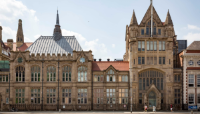 SHNH is delighted to award the SHNH President’s Award 2026 to Manchester Museum. The Award recognises an individual or team’s contribution and impact in promoting and improving accessibility, inclusivity and diversity to the study of the history of natural history.
The Manchester Museum has been ‘Championing diversity through leadership and new policies’ with decision making on restitution and decolonisation of its collections being undertaken in consultation with its entire staff. It has been recognising and acting on ways to redress its past colonial heritage and ensuring restitution of significant cultural and other items within its collections.
The achievements of staff working in the Manchester Museum include restitution to communities of origin, as well as co-curation with diaspora communities on how to display connections, with social justice work within the museum helping to build trust and healing with people in Manchester and elsewhere.
Some examples of their recent work include:
- The unconditional repatriation by the Manchester Museum of secret sacred objects to communities of origin helps create healing, justice and reconciliation. This has included formal ceremonies for the return of indigenous objects in 2020. https://www.museum.manchester.ac.uk/return-of-43-aboriginal-objects
- The story of the ‘Dadikwakwa-kwa come out to play’ shell dolls is a particularly moving example of trust being built between the Anindilyakwa People, of Groote Eylandt, through the return of their lost cultural heritage and a reciprocal agreement where some of those objects were returned to Manchester, with conditions ensuring their continued ‘use’ by local children. https://youtu.be/izj1RGxWDyk
- Restitution of museum specimens has also been undertaken, returning biological specimen material to Jamaica to fill gaps in their holdings of indigenous natural history.
- The ‘Decolonise trail’ reinterpreting the museum displays in the Africa Hub, South Asia gallery and Belonging gallery, where co-production and foregrounding the voices and knowledge of Indigenous and diaspora communities have been central https://www.museum.manchester.ac.uk/decolonise/ .
The practise of social justice at Manchester Museum has helped to inform all the work they do – from the communities they work with, to the stories told across galleries, from the accessible facilities in the building to the practices that shape how we take care of the collections.
SHNH Founders’ Medal
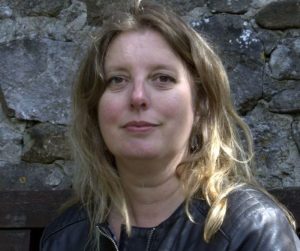 The Society is very pleased to announce that our Founders’ Medal will this year be awarded to Anna Marie Roos, Emeritus Professor of the History of Science and Medicine at the University of Lincoln. The Founders’ Medal is awarded for substantial contributions to the study of the history or bibliography of natural history.
Professor Roos is internationally recognised for her scholarship on the history of the Royal Society, the development of scientific illustration, and the evolution of the early science museum and its ‘publics’. Her academic teaching career extends over thirty years. Concurrently, she has held a number of external offices, including as editor-in-chief of Notes and Records of the Royal Society (2018–2024); she is also an FLS, FSA and FRHS.
Author/editor of 12 books and over 35 articles, her work analyses the development of early scientific method and fieldwork, challenging current assumptions about the arts-science divide. Her extensive publishing output includes a number of major works, including two volumes of edited correspondence of Martin Lister (Volume 1; Volume 2), and most recently a biography of Martin Folkes (‘Newtonian, Antiquary, Connoisseur’) to complement an earlier edition of Folkes’s Grand Tour diary.
The position she has established for herself, straddling the fields of both the history of science and the history of natural history, has rendered her a significant member of our community, able to convey the importance of natural history studies to a wider audience than might routinely be attracted to the (admittedly sometimes niche) themes that absorb us in the Society. The personalities on whom she has worked extensively – Willughby, Lister, Grew, Newton, Folkes, Lhuyd, Ruskin and others – were all polymaths to whom the idea of disciplinary boundaries would have been meaningless and proper assessment of their work is dependent on researchers who are equally capable of looking across the whole range of activity in the natural sciences within a historical context. The breadth of the themes she has explored – ‘The chymistry of the learned Dr Plot’; ‘Salient theories in the fossil debate in the early Royal Society’; ‘Thomas Philipot and chemical theories of the tides in seventeenth-century England’; ‘The philosophy of colour’ – hint at the impressive range of subjects in the natural sciences that she has tackled in detail, as do her contributions to a number of substantial published volumes and a variety of scholarly journals – over twenty in number – Notes and Records of the Royal Society; History of Science; Eighteenth-Century Thought; Ambix; Nuncius, Bulletin of Zoological Nomenclature and Zoological Journal of the Linnean Society – to mention only a few. She is also a prolific reviewer across a similarly wide spectrum of publications, contributing thoughtfully to the debates covered in their subject-matter. She has organized ten academic conferences and has contributed to almost thirty others; she has also been a regular contributor and adviser to radio and television programmes.
SHNH Natural History Book Prize (John Thackray Medal)
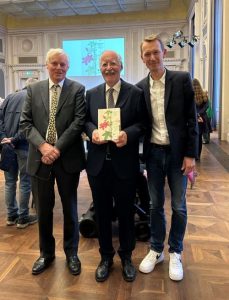 The Society is very pleased to announce that our prestigious Natural History Book Prize (the John Thackray Medal) will this year be awarded Hans Walter Lack, James A. Compton & Martin W. Callmander for The Redouté brothers: Masters of scientific illustration in Paris (Conservatoire et Jardin botaniques de Genève & Muséum national d’Histoire naturelle, Paris: 2024. ISBN 978-2-38327-020-1).
This work provides the first comprehensive biography of the three Redouté brothers, Antoine-Ferdinand, Pierre-Joseph and Henri-Joseph. Originating from humble origins in the Ardennes, they all took root in Paris where Antoine-Ferdinand became a decorative painter. By contrast Pierre-Joseph and Henri-Joseph embarked as botanical illustrators on a scientific and aesthetic career including numerous contributions to the prestigious royal paintings on vellum.
The central figure of the book is Pierre-Joseph, whose accurate illustrations document science during the late phase of the Enlightenment, throughout the turbulences of the French Revolution, the Napoleonic era and into the Restoration.
The book is fascinating in outlining Pierre-Joseph’s interactions with major political and cultural figures of the time, such Empress Josephine and Queen Maria Amalia. An indefatigable worker, he produced an enormous number of botanical illustrations, many of a very high calibre. A large number of which were reproduced as engravings for a long list of publications which multiplied by many times the effect of his work.
Pierre-Joseph’s association with botanists Charles Louis L’Héritier de Brutelle and Augustin Pyramus de Candolle and the new Muséum d’Histoire naturelle, ensured successive commissions. Henri-Joseph joined the scientific team that accompanied Napoleon’s Egyptian campaign, documenting plants, animals and artifacts. Although his output was more geared towards paintings of animals, he was frequently asked to contribute botanical works for Pierre-Joseph. The book also explores the international links between the artists and their notable contemporaries, including Sir Joseph Banks and Sir James Edward Smith.
It was noted that ‘this is rare for a book that fulfils its objective to appraise the work of what is generally recognised to be France’s leading family of natural history illustrators in the eighteenth and early nineteenth century. It represents a biography of the three Redouté brothers, each being noteworthy as individuals and also artists of great significance in their experience of the upheavals that rocked France during and after its revolution.’
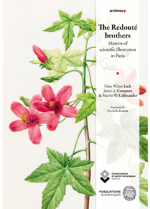 The judges commented the book reflects a significant body of research that has gone into its production, drawing not only on the extensive material that has already been published on the Redouté brothers but also the wealth of unpublished archive and museum material. The book is primarily a biographical work, but it also represents a comprehensive analysis of the bibliography of the works in which their drawings and paintings were published. It describes the science of the time and the importance of illustration and hence their roles in disseminating information.
One of the judges noted that they are ‘awed and impressed by the detailed references, separate list of unpublished sources, the indexes – separate for general, people, places, species names. I wish more authors took such care over indexes.’
The judges thought that anyone with a love of botanical art will enjoy reading this book, but that it will also appeal to a wider audience. The Redoutés were also zoological illustrators, and their work encompasses a range of styles from the purely decorative to the meticulous recording of fine details for scientific purposes.
For those interested in reading more about The Redouté brothers: Masters of scientific illustration you can access a review by Alex George in the Society’s journal Archives of Natural History who like the judges thought this was ‘a masterpiece’.
William T. Stearn Student Essay Prize
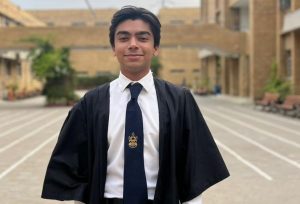
The Council of the Society for the History of Natural History is delighted to announce that the winner of the William T. Stearn Student Essay Prize, 2025, is Muhammad Ali Ozain for his essay: ‘The taxonomy of faith: gardens, flora, and the Islamicate imagination in Mughal India’. Ali is currently reading BA (Hons) History, Politics and Economics at University College London and specialising in History.
Judges agreed that this was a well-written and nicely-argued essay which offers a close reading of Mughal gardens in the 16th to 18th centuries. Drawing on memoirs, horticultural treatises and illustrated manuscripts, the author shows how these gardens blended religious symbolism with practical knowledge, contributing to understandings of plant cultivation and plant taxonomy.
In writing about the award Ali says: ‘I am honoured and delighted to receive the William T. Stearn Student Essay Prize for my paper on how Mughal gardens were not only aesthetic expressions of paradise but also living archives of taxonomy and theology. In an era when the process of decolonisation is reshaping how we write global histories, I believe it is vital to foreground these parallel traditions of natural history on their own terms. It is both humbling and inspiring to have this work recognised by the Society for the History of Natural History, and I am grateful for the opportunity to contribute to a field that continues to expand its horizons.’
We send our warmest congratulations to all the winners.