Society for the History of Natural History Book Prize 2026

The prize is awarded for the best book published on the history or bibliography of natural history in the preceding two years.
Closing date is 30 June 2026.
Winners receive the John Thackray Medal, instituted in 2000 to commemorate the life and work of John Thackray (1948–1999), Past President of SHNH, and an outstanding scholar of the history of science with an enviable knowledge of natural history. He served as an Officer of the Society for the History of Natural History for 24 years (1973–1997) and in 1999 became the Society’s President. He authored 30 books and articles including Guide to the Official Archives of the Natural History Museum (1998).
Guidelines
- Prize winners are chosen by a panel of 3 judges (all members of the Society).
- Competition opens on 1 January 2026.
- Nominations may be made by SHNH members, or submitted by publishers.
- All books must be received by 30 June. Three copies of the book you wish to considered should be sent to the Chair of the Book Prize Panel. Contact Geraldine.Reid@liverpoolmuseums.org.uk to obtain the Chair’s name and address.
- All books should have been published in the two calendar years preceding the year the award will be presented. For instance, works published in 2024 and 2025 will be eligible for the 2026 award.
Selection Criteria
The prize will be awarded to the book which contributes most significantly to the history of natural history. Significance will be assessed on the basis of:
- Originality
- Organisation and presentation of information
- Excellence of intellectual content
- Contribution to the literature of the field.
Submission
Nominations must be sent to the Chair of the Book Prize Panel and include the following:
- Your name as a nominator and your contact details.
- The nominee’s name and contact details.
- A supporting statement (up to 600 words) describing why the nominee should receive the award.
SHNH Natural History Book Prize 2025
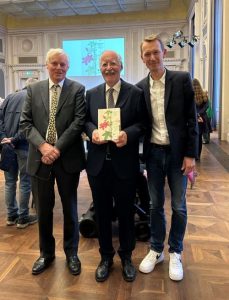 The Society is very pleased to announce that our prestigious Natural History Book Prize (the John Thackray Medal) will this year be awarded Hans Walter Lack, James A. Compton & Martin W. Callmander for The Redouté brothers: Masters of scientific illustration in Paris (Conservatoire et Jardin botaniques de Genève & Muséum national d’Histoire naturelle, Paris: 2024. ISBN 978-2-38327-020-1).
This work provides the first comprehensive biography of the three Redouté brothers, Antoine-Ferdinand, Pierre-Joseph and Henri-Joseph. Originating from humble origins in the Ardennes, they all took root in Paris where Antoine-Ferdinand became a decorative painter. By contrast Pierre-Joseph and Henri-Joseph embarked as botanical illustrators on a scientific and aesthetic career including numerous contributions to the prestigious royal paintings on vellum.
The central figure of the book is Pierre-Joseph, whose accurate illustrations document science during the late phase of the Enlightenment, throughout the turbulences of the French Revolution, the Napoleonic era and into the Restoration.
The book is fascinating in outlining Pierre-Joseph’s interactions with major political and cultural figures of the time, such Empress Josephine and Queen Maria Amalia. An indefatigable worker, he produced an enormous number of botanical illustrations, many of a very high calibre. A large number of which were reproduced as engravings for a long list of publications which multiplied by many times the effect of his work.
Pierre-Joseph’s association with botanists Charles Louis L’Héritier de Brutelle and Augustin Pyramus de Candolle and the new Muséum d’Histoire naturelle, ensured successive commissions. Henri-Joseph joined the scientific team that accompanied Napoleon’s Egyptian campaign, documenting plants, animals and artifacts. Although his output was more geared towards paintings of animals, he was frequently asked to contribute botanical works for Pierre-Joseph. The book also explores the international links between the artists and their notable contemporaries, including Sir Joseph Banks and Sir James Edward Smith.
It was noted that ‘this is rare for a book that fulfils its objective to appraise the work of what is generally recognised to be France’s leading family of natural history illustrators in the eighteenth and early nineteenth century. It represents a biography of the three Redouté brothers, each being noteworthy as individuals and also artists of great significance in their experience of the upheavals that rocked France during and after its revolution.’
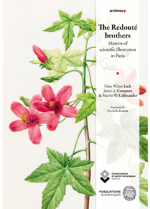 The judges commented the book reflects a significant body of research that has gone into its production, drawing not only on the extensive material that has already been published on the Redouté brothers but also the wealth of unpublished archive and museum material. The book is primarily a biographical work, but it also represents a comprehensive analysis of the bibliography of the works in which their drawings and paintings were published. It describes the science of the time and the importance of illustration and hence their roles in disseminating information.
One of the judges noted that they are ‘awed and impressed by the detailed references, separate list of unpublished sources, the indexes – separate for general, people, places, species names. I wish more authors took such care over indexes.’
The judges thought that anyone with a love of botanical art will enjoy reading this book, but that it will also appeal to a wider audience. The Redoutés were also zoological illustrators, and their work encompasses a range of styles from the purely decorative to the meticulous recording of fine details for scientific purposes.
For those interested in reading more about The Redouté brothers: Masters of scientific illustration you can access a review by Alex George in the Society’s journal Archives of Natural History who like the judges thought this was ‘a masterpiece’.
The Society for the History of Natural History Book Prize
 |
 |
 |
 |


